


Greetings
There is a saying that "the skin is a mirror of the internal organs."
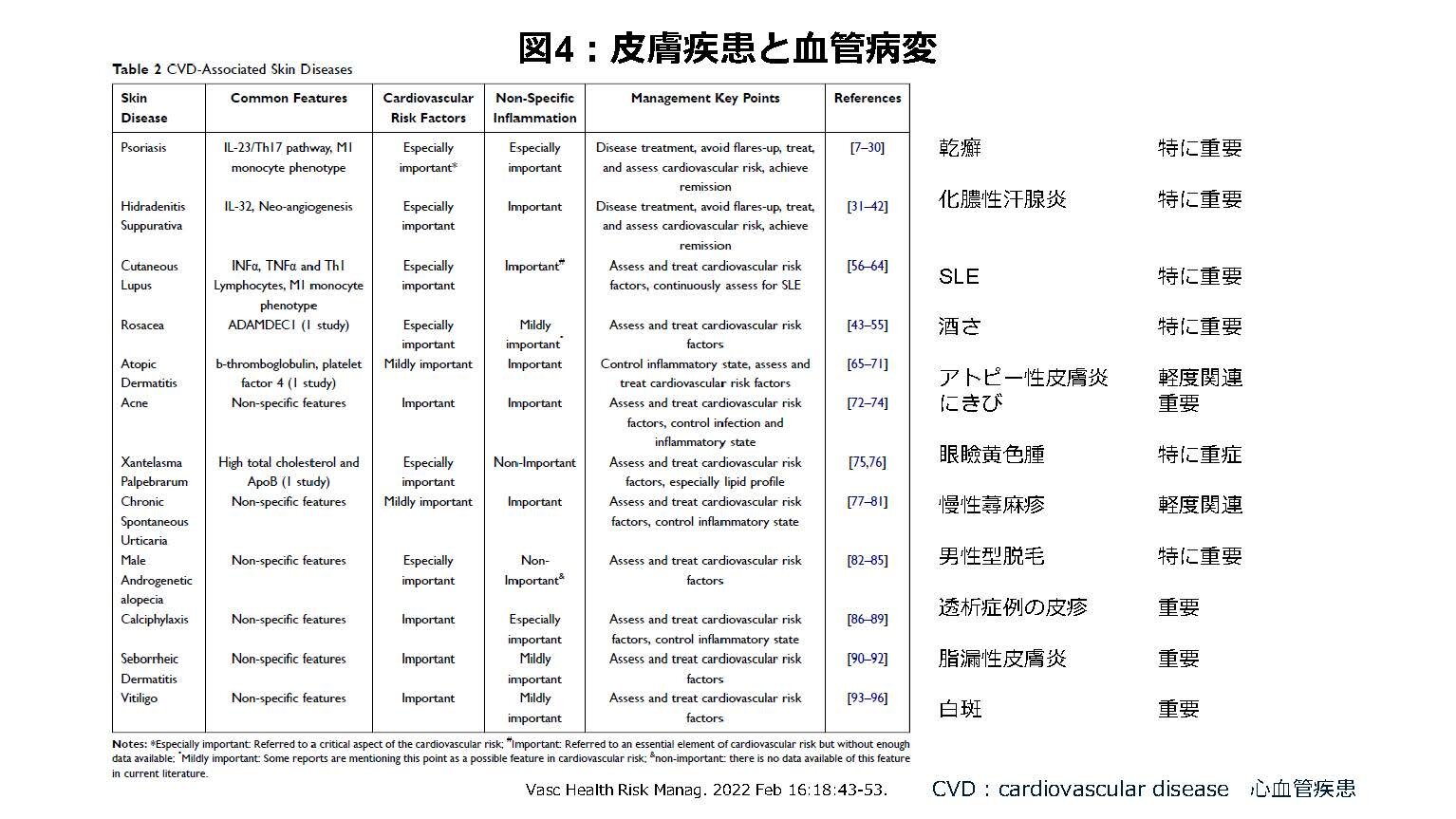
It is dermatology 's greatest joy to be able to detect internal organ problems through skin symptoms and connect them to appropriate medical treatment. If this is the case, it is natural to think that skin problems may in turn lead to internal organ problems. A decade or so ago, medical science was unable to prove the causal relationship between the two, and it was considered merely an armchair theory. However, advances in medicine over the past few years have begun to prove this causal relationship, and it is now known that various skin diseases can induce vascular diseases (Figure 4).
In November 2020, I opened the Psoriasis Center at Kansai Medical University, where I had previously worked. Until then, psoriasis treatment was vertically divided into three sections: skin symptoms were treated at dermatology, joint symptoms at the Department of Rheumatology and Collagen Diseases or plastic surgery, and eye lesions at ophthalmology. The Psoriasis Center was established to strengthen horizontal linkage and provide high quality treatment efficiently by examining all over the body. As a result, we were able to diagnose and treat patients with psoriasis who had been diagnosed and were refractory to treatment, and to diagnose and treat symptoms and comorbidities associated with psoriasis before they were diagnosed, even though skin symptoms were not yet recognized.
When our center is contacted by affiliated clinics and hospitals, we propose appropriate treatments and examinations, and not only treat the skin, but also work with various medical departments and Food and Nutrition Department to prevent and control systemic diseases. If we know your needs in advance, we will schedule examinations at our center and appointments with other departments and centers in advance, so that you can receive treatment efficiently and minimize the number of visits to other departments or examinations on a different day after your visit. Of course, you can also just come for a consultation.
Our goal is to "extend the healthy life expectancy of local patients, starting with skin care." If you have any concerns about your skin, please contact the Tokai University Psoriasis and Atopic Dermatitis Center.
Director of the Psoriasis and Atopic Dermatitis Center
Fumikazu Yamazaki
Overview
"What is the Psoriasis and Atopic Dermatitis Center?"
You may have this question. Psoriasis is a chronic skin disease accompanied by a rash. It is divided into several types depending on the appearance of the rash, and in some cases, psoriasis can also affect the joints, causing inflammation and pain. It can develop in childhood, but most cases occur in adults.
Atopic dermatitis is a disease in which the skin's barrier function is weakened, causing itchy eczema that repeatedly improves and worsens. It often begins in childhood, and while some cases improve naturally, it can recur in adulthood or develop and persist for long periods in adulthood. Rashes can appear on the face, and scratching can lead to eye diseases such as retinal detachment and cataracts.
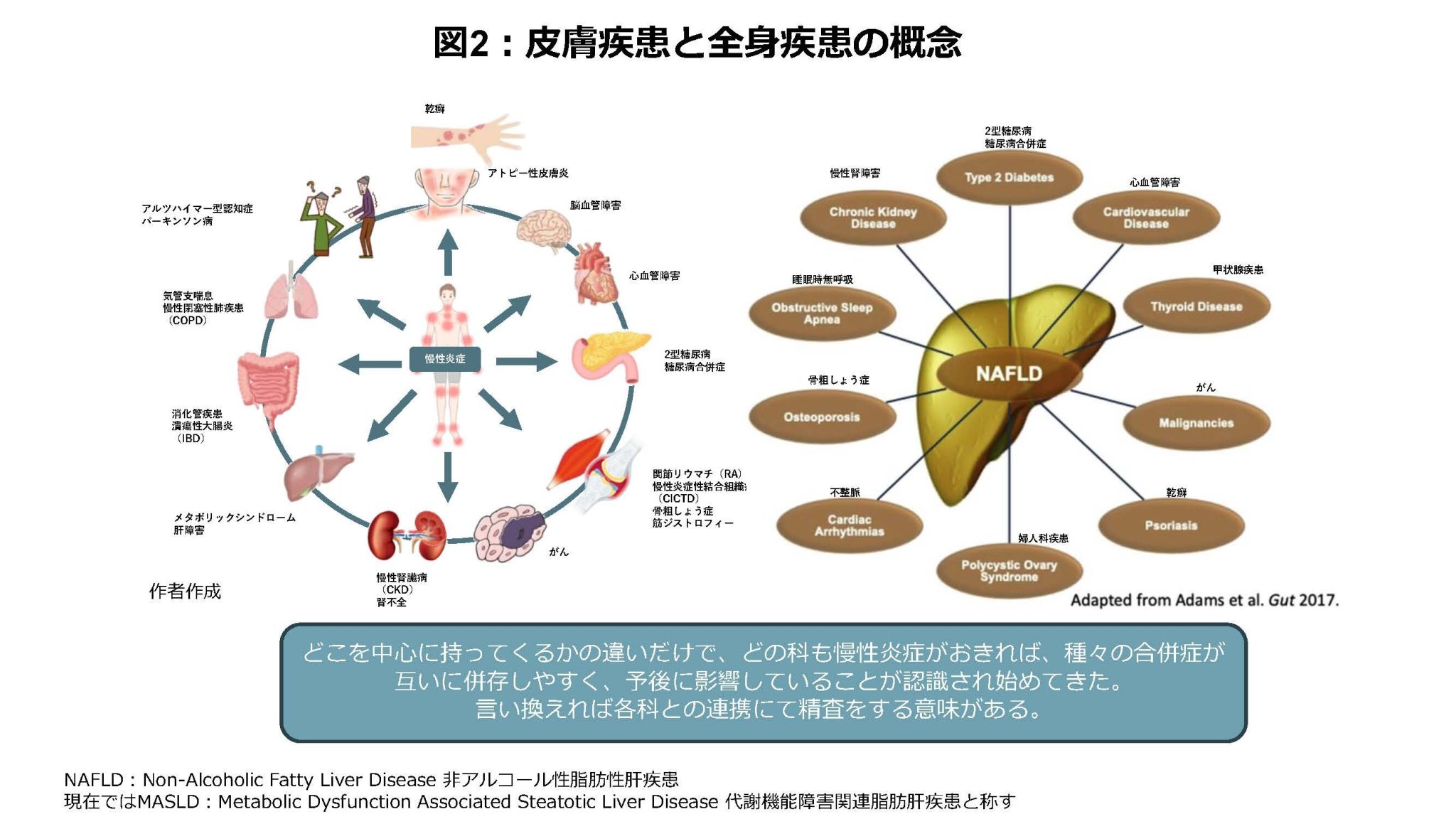
The commonality between these two skin diseases is that inflammation of the skin continues for a long period of time. You may think this is obvious, but remember that the skin is the largest organ in the human body and is connected to the internal organs through blood vessels. What do you think if you were to learn that something that seems obvious in recent years has been proven to suggest that chronic problems with the skin, our largest organ, can lead to problems with the internal organs?
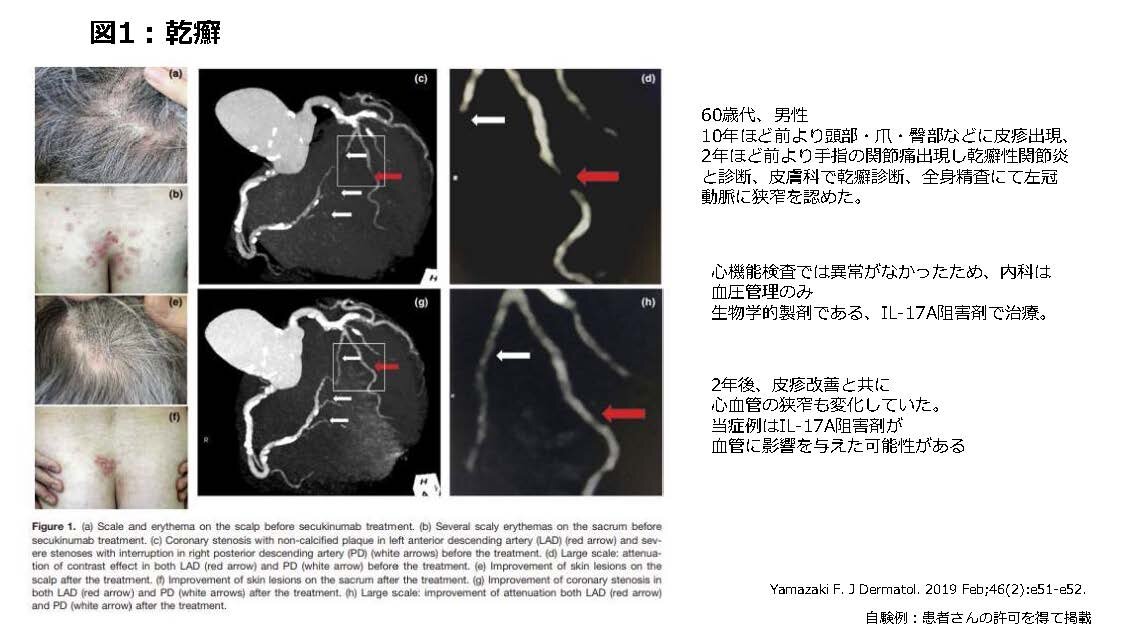
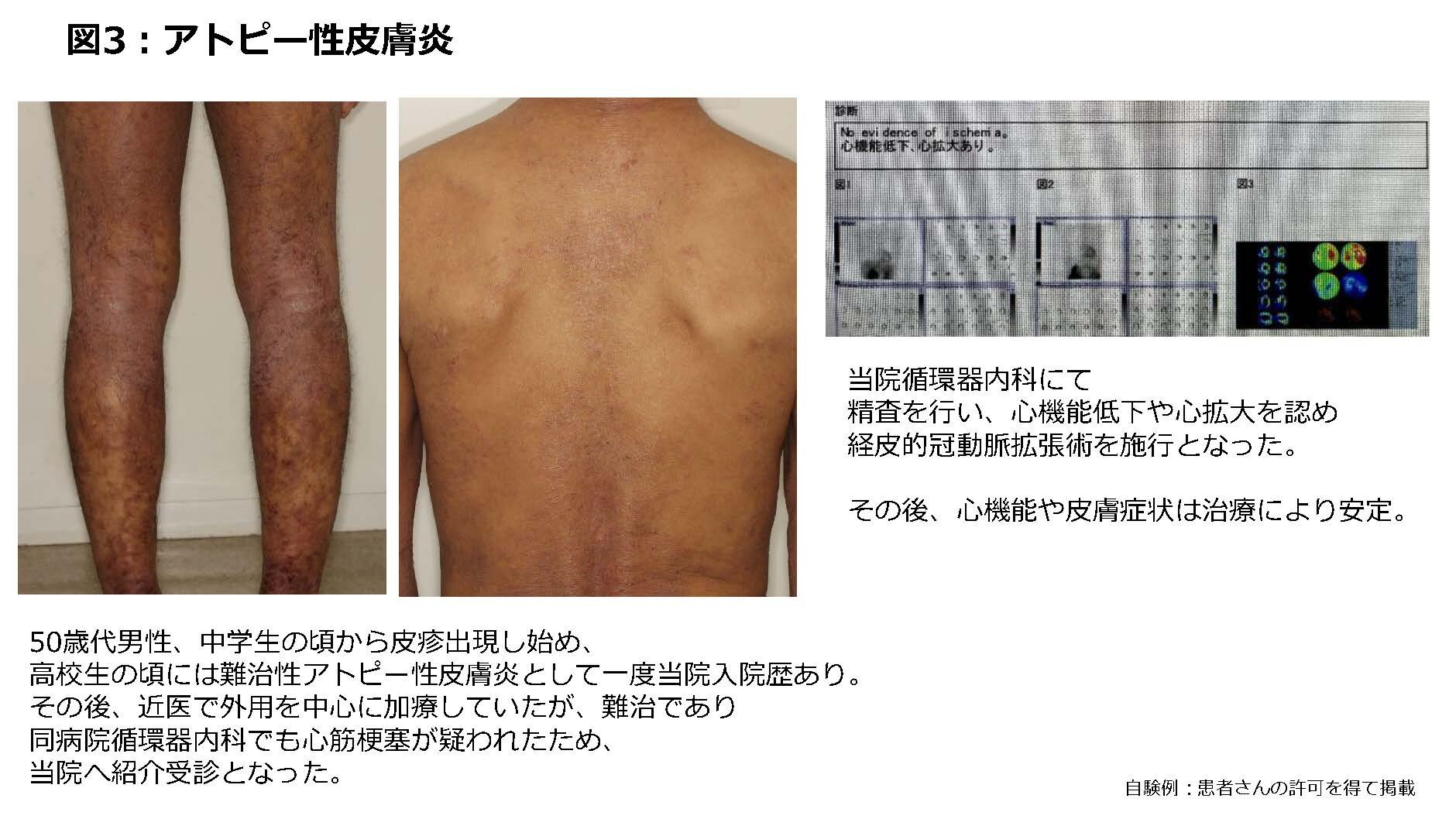
About 15 years ago, it became clear that psoriasis often causes problems (comorbidities) not only in the skin but also in the joints, liver, heart, and pancreas, and it became clear that it was important for various departments to work together to manage and treat the condition (Figures 1 and 2).About 10 years ago, it was discovered that not only psoriasis but also atopic dermatitis often had similar comorbidities (Figure 3).
At our center, we offer appropriate skin treatments not only for psoriasis, but also for patients suffering from chronic skin conditions including atopic dermatitis (palmoplantar pustulosis, hidradenitis suppurativa, prurigo nodularis, chronic polymorphous prurigo, dialysis-associated pruritus, chronic urticaria, vitiligo, pyoderma gangrenosum, etc.), and we also search for coexisting conditions and provide treatment in each department.