
Greetings
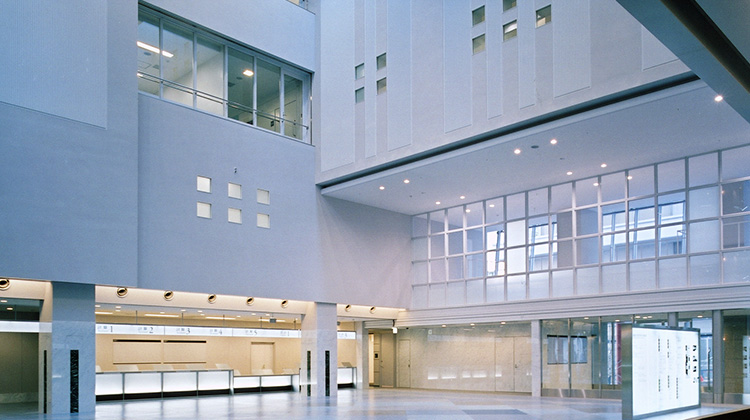
In ophthalmology, we place the utmost importance on providing patient-centered diagnosis, treatment, and surgery. Our affiliated hospital, newly established in 2005, features spacious waiting rooms and examination rooms designed to minimize stress for patients. We are constantly striving to hone our insight and introduce the latest equipment to detect even the smallest lesions. The eyeball and its adnexa can suffer from a variety of conditions, including aging, infection, inflammation, complications from systemic diseases, and trauma. While we are prepared to treat all conditions, we particularly focus on lens diseases such as cataracts, retinal detachment, diabetic retinopathy, and other retinal disorders, visual field disorders such as glaucoma, neuro-ophthalmic disorders, and pediatric conditions such as strabismus.
Director of ophthalmology
Takahiro Suzuki
Treatment details
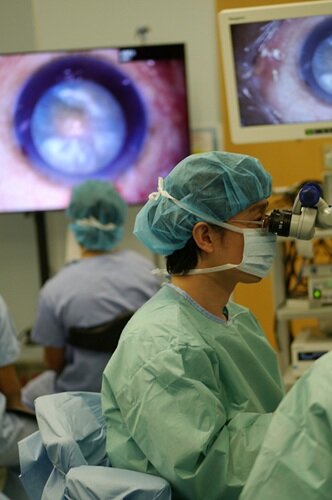
We primarily treat patients who require surgery or hospitalization, as well as those with unstable medical conditions. We often receive referrals from far away, and aim to confirm diagnoses and determine treatment plans with as few visits as possible. Our surgical expertise focuses on vitreoretinal, glaucoma, and cataract surgery, and we are prepared to accommodate a variety of procedures on any given day. In addition to surgery, we also specialize in the medical treatment of inflammatory eye diseases such as optic neuritis, thyroid eye disease, and uveitis, as well as the diagnosis and treatment of pediatric ophthalmology conditions such as strabismus, amblyopia, and retinopathy of prematurity. We also collaborate smoothly with other departments to treat conditions that span multiple disciplines. We also accept patients with emergencies, such as ocular trauma and retinal detachment, at any time.
Main target diseases
Diabetic retinopathy, glaucoma, retinal vascular occlusion, retinal detachment, macular hole, age-related macular degeneration, retinopathy of prematurity, central serous chorioretinopathy, and other general fundus diseases, as well as cataracts, strabismus/amblyopia, uveitis (iridocyclitis, Behcet's disease, Harada's disease), optic nerve diseases, ocular trauma, thyroid eye disease, and orbital diseases such as idiopathic orbital inflammation.
Main medical achievements
The average number of outpatient referrals per month is approximately 172, and the referral rate is approximately 95%. Regarding the number of surgeries, the breakdown for fiscal year 2024 was as follows, in descending order: cataract surgery 1,743 cases, retinal and vitreous surgery 693 cases, laser surgery 275 cases, glaucoma surgery 202 cases, and strabismus surgery 52 cases.
Glaucoma:
We select the best treatment method and provide continuous treatment with the aim of maintaining good visual function. We use various surgical procedures depending on the condition, and have achieved good results by introducing tube shunt surgery for intractable cases that were previously difficult to control.
Vitreoretinal disease:
This is an area where the development of diagnostic equipment has been remarkable, and our hospital combines OCT (optical coherence tomography), OCTA (optical coherence tomography angiography), FAF (fundus autofluorescence), and FA/IA (fundus angiography) to enable more accurate diagnoses. Surgery is performed for conditions such as proliferative diabetic retinopathy, macular hole, premacular membrane, and vitreous hemorrhage, but rhegmatogenous retinal detachment often requires semi-emergency surgery, and we will contact the admission and discharge center to secure a room for the patient. We carefully determine the surgical method that best suits the patient's condition of retinal detachment and select scleral buckling or vitreous surgery.
Strabismus:
If surgery is performed under general anesthesia for children, the hospital stay is 3 nights and 4 days. If surgery is performed under local anesthesia, the hospital stay is 1 night and 2 days.
Cataract surgery:
As many patients experience systemic complications, we pay close attention to preoperative systemic examinations and, together with paramedical staff, strive to prevent ocular and systemic complications before and after surgery. For one eye (and sometimes both eyes), the procedure requires a two-day, one-night hospital stay. If general anesthesia is required, a three-day, two-night hospital stay is required.
Doctor List
Department Head: Takahiro Suzuki
Ward 13A Chief Physician: Takahiro Suzuki
Outpatient: 0463 (93) 1121 extension 6411, 6412
Professor Takahiro Suzuki
| Specialization | Cataracts, macular disease, vitreoretinal disease |
|---|---|
| Specialist | Specialist and instructor ophthalmology |
| Specialized Areas | Diagnosis and treatment of Vitreoretinal surgery |
| Outpatient medical day | Tuesday and Friday |
Assistant Professor Tan Setsu
| Specialization | Macular disease, retinopathy of prematurity |
|---|---|
| Specialist | Specialist and instructor ophthalmology |
| Specialized Areas | Medical Retina, diagnosis and treatment of retinopathy of prematurity |
| Outpatient medical day | Mondays and Thursdays |
Assistant Professor Akihiro Takeshita
| Specialization | Retinal and vitreous diseases, neuro-ophthalmology |
|---|---|
| Specialist | Specialist ophthalmology |
| Specialized Areas | vitreoretinal surgery |
| Outpatient medical day | Monday and Friday |
Assistant Professor Yosuke Miyao
| Specialization | vitreoretinal disease |
|---|---|
| Specialist | Specialist ophthalmology |
| Specialized Areas | vitreoretinal surgery |
| Outpatient medical day | Tuesday and Wednesday |
Assistant Professor Takashi Matsushima
| Specialization | Glaucoma, cataracts |
|---|---|
| Specialist | Specialist ophthalmology |
| Specialized Areas | Diagnosis and treatment of glaucoma, cataract surgery |
| Outpatient medical day | Wednesday and Thursday |
Assistant Professor Eri Sato
| Specialization | cataract |
|---|---|
| Specialist | Specialist ophthalmology |
| Specialized Areas | cataract surgery |
| Outpatient medical day | Monday and Friday |
Assistant Professor Muneyuki Inosaka
| Specialization | Cataracts, uveitis |
|---|---|
| Specialist | none |
| Specialized Areas | Cataract surgery, diagnosis and treatment of inflammatory diseases |
| Outpatient medical day | Tuesdays, Thursdays |