

Greetings
The specialized staff of Rehabilitation Services Department work in collaboration with many other professionals to provide acute rehabilitation for a wide variety of illnesses and injuries. Our goal is not only to maximize recovery from illness or injury, but also to prevent secondary symptoms such as joint stiffness and muscle weakness caused by rest. Therefore, we begin rehabilitation as early as possible, aiming to help patients rebuild their lives and return to society in the best possible condition. Many of our patients experience significant anxiety shortly after the onset of their illness. Our staff strives daily to hone their interpersonal skills to empathize with these patients, while also utilizing their solid knowledge and skills to help them in any way they can. Above all else, the understanding and cooperation of patients and their families is essential for rehabilitation. If you have any questions, please feel free to contact Rehabilitation Center.
Head of Rehabilitation Services Department
Masumi Takahashi
Overview
Rehabilitation Services Department provides intensive rehabilitation for hospitalized patients, starting from the acute phase.The facility is certified for the following rehabilitation fees: Cardiovascular Disease Rehabilitation Fee I, Cerebrovascular Disease Rehabilitation Fee I, Disuse Syndrome Rehabilitation Fee I, Musculoskeletal Rehabilitation Fee I, Respiratory Rehabilitation Fee I, and Cancer Patient Rehabilitation Fee.
We intervene early not only for inpatients in general wards, but also for acutely ill patients requiring medical management who are hospitalized in the emergency center or ICU, striving to prevent complications such as disuse syndrome and promote functional recovery. In addition, we collaborate with Department of Rehabilitation specialists, physicians in various clinical departments, and other related professionals to address a wide range of areas, including not only motor function disorders, but also developmental support in children, higher brain dysfunction and swallowing disorders in central nervous system diseases, respiratory rehabilitation, cardiac rehabilitation, cancer rehabilitation, and diabetes education hospitalization.
Furthermore, we are working to implement more effective rehabilitation practices by assigning therapists to wards and collaborating with various professionals.
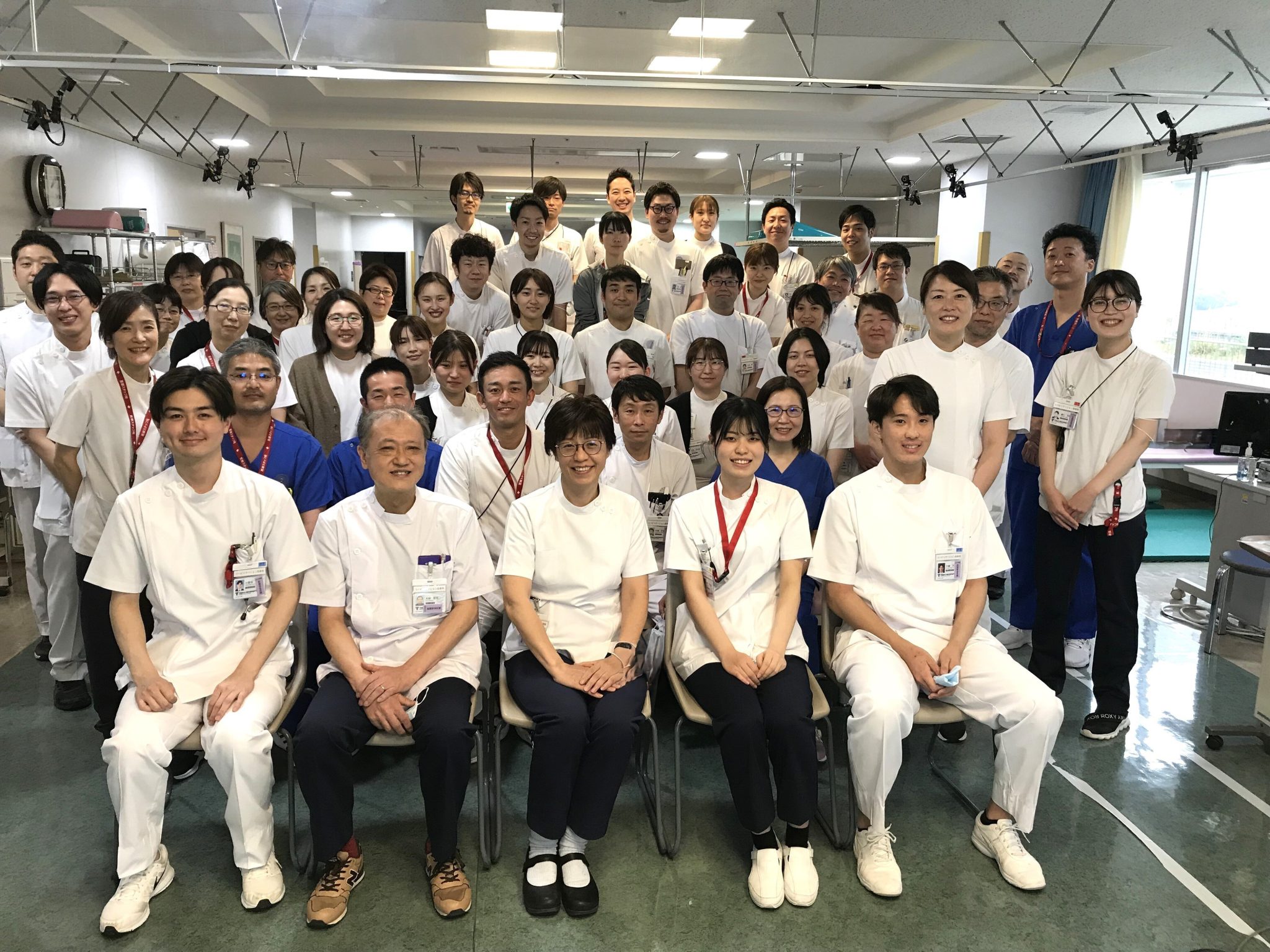
Staff Composition
-
37 physical therapists
-
13 occupational therapists
-
12 speech-language pathologists
Qualifications list
-
Certified by the Japanese Physical Therapy Association (1 person)
-
Three individuals certified by the Japan Physical Therapy Association.
-
Certified by the Japanese Physical Therapy Association (1 person)
-
Three individuals certified by the Japan Physical Therapy Association.
-
Two certified by the Japanese Physical Therapy Association.
-
Certified by the Japanese Physical Therapy Association (1 person)
-
Eight certified cardiac rehabilitation instructors (certified by the Japanese Society of Cardiac Rehabilitation, a specified non-profit organization).
-
12 3-society joint respiratory therapy certified persons (certified by 3-society joint respiratory therapy certified certification committee)
-
One certified facial nerve paralysis rehabilitation specialist (certified by the Japanese Society of Facial Nerve)
-
Nutrition Support Team Specialist Therapist (certified by the Japanese Society for Nutritional Therapy): 1 person
-
One certified specialist by the Japanese Society of Dysphagia Rehabilitation (certified by the Japanese Society of Dysphagia Rehabilitation).
-
48 participants completed a cancer rehabilitation training workshop (certified by the Life Planning Center, a general incorporated foundation, and the Japanese Physical Therapy Association).
-
AMPS Certified Evaluator (1 person)
-
One A-one certified evaluator
-
Three participants in the training course for detailed perceptual function testing.
-
44 participants completed the Clinical Practice Instructor Training Course (certified by the Japan Rehabilitation School Association, the Japanese Physical Therapy Association, and the Japanese Occupational Therapy Association).
(As of April 2026)