Tokai University Hospital

Font size
ENGLISH JAPANESE
ENGLISH
JAPANESE
For visitors
For medical professionals
Hospital Information
Clinical department/department
Recruitment Information

phone

Web
reservation

Clinical department/department

Critical Care Department

Greetings

The emergency medical field is a frontline where "split-second decisions" and "comprehensive skills" are put to the test. Tokai University Emergency Medical Center is a core tertiary emergency medical facility serving the Shonan, western, and central areas of Kanagawa Prefecture, handling 6,600 ambulance transports and 2,400 critically ill patient treatments annually. The greatest feature of our Emergency Medical Center is that we provide seamless "comprehensive emergency medical care" from pre-hospital emergency care to ER and intensive care. For pre-hospital emergency care, we utilize all means of transportation—land (ambulance, doctor car, work station), sea (offshore emergency), and air (doctor helicopter)—to begin treatment on-site and quickly stabilize the patient. In the ER, we provide multidisciplinary treatment in collaboration with specialists from various departments to treat the patient fundamentally. After admission to Emergency Medical Center, we provide comprehensive and advanced intensive care in cooperation with other professions, and we dedicate ourselves to the patient's return to society.

With the slogan "We never turn anyone away," we have established a system to serve as the "last resort" and be available 24 hours a day, 365 days a year.

Director of Emergency Medical Center and Head of the Department

Asuka Tsuchiya

Treatment details

2002: Received accreditation as Emergency Medical Center from the Ministry of Health, Labour and Welfare.

2002: Approved as a base hospital for the Kanagawa Prefecture Doctor Helicopter (contributing to emergency medical care throughout Kanagawa Prefecture and southern Yamanashi Prefecture).

[Medical Team Structure]

In the 2026 academic year, the Department of Emergency and Critical Care Medicine, Faculty of Medicine, Tokai University, has 50 physicians in total. Emergency Medical Center Tokai University Hospital consists of 24 physicians: 3 professors, 2 associate professors, 5 lecturers, 5 assistant professors, and 8 clinical assistants. Emergency and critical care specialists form medical teams with clinical residents, nurses, students, and paramedics to provide a wide range of emergency medical care. Two medical teams, an ER team and an ICU (inpatient unit) team, are formed to provide initial treatment for emergency transport patients, and Critical Care Department radiology. Diseases are assigned to the respective specialty departments, but the department is responsible for inpatient treatment of trauma (acute abdominal pain), sepsis, poisoning, burns, PCAS, environmental disorders, diseases requiring hyperbaric oxygen therapy, and other critically ill patients (cases that are difficult for specialty departments to handle). In addition to general intensive care, the ICU (inpatient ward) team is responsible for specialized treatments such as VV(A)-ECMO, RRT/CRRT, and HBO.

[Medical Control System]
As a core hospital of the Shonan area (population approximately 2 million), we have established a Medical Control Office within our Emergency Medical Center, contributing to improving the quality of pre-hospital emergency medical care provided by paramedics. One physician is always on duty as the Medical Control Officer, providing instructions, guidance, and advice to paramedics and other emergency medical personnel regarding medical procedures (such as tracheal intubation, intravenous access, drug administration, and defibrillation).

[Disaster Medical System]

As one of the disaster base hospitals, we are responsible for Kanagawa Prefecture's mass casualty medical system and have established a system to dispatch medical teams to disaster sites by forming DMAT (Disaster Medical Assistance Teams). We have a system in place to dispatch approximately three teams at any given time, with 25 members in Japan DMAT (8 doctors, 10 nurses, and 7 operational coordinators) and 13 members in DMAT-L (4 doctors, 4 nurses, and 5 operational coordinators).

[Marine Emergency Medical Care]

In order to save the lives of injured or ill individuals on vessels navigating or operating in the Pacific Ocean under the Second and Third Regional Coast Guard Headquarters, we are deploying medical teams to the open sea in cooperation with the Japan Coast Guard and the Japan Maritime Self-Defense Force. Government aircraft land on the water to rescue patients from vessels, and they are transported to our hospital while receiving continued treatment on board the aircraft. We are deployed to locations even further away than Okinotorishima (Japan's southernmost island) and Minamitorishima (Japan's easternmost island).

[Emergency Medical Technician Training]

We accept paramedics for hospital internships and are committed to their education, providing them with various types of hospital training (pre-graduation internships, pre-employment internships, retraining internships, tracheal intubation internships [Department of Anesthesiology], drug administration internships).

Main target diseases

In addition to emergency medical specialists, our department has a system in place to respond to medical needs with specialists from each medical department, allowing us to quickly respond to critically ill patients with the following serious conditions who are eligible for Emergency Medical Center.


Cardiopulmonary arrest

Loss of consciousness

Shock

Multiple trauma

Severe burns

Acute poisoning

Limb amputation

Cerebrovascular disease

Ischemic heart disease

Arrhythmia

Respiratory failure

Acute abdomen

Metabolic disease

Acute carbon monoxide poisoning

Gas gangrene, etc.


Furthermore, the hospital has specialized medical facilities including a skin bank and an acute poisoning diagnosis and testing laboratory, giving it excellent capabilities in treating severe burns and acute poisoning. The acute poisoning diagnosis and testing laboratory contributes to poisoning treatment by conducting quantitative analysis of drugs and poisons, and is also developing new analytical methods to advance the understanding of poisoning pathologies. For acute carbon monoxide poisoning, gas gangrene, decompression sickness, etc., a 24-hour medical system is in place that allows for rapid hyperbaric oxygen therapy using a large hyperbaric oxygen therapy machine that can accommodate five people simultaneously, and it is used for the treatment of severe cases not only from within the prefecture but also from Shizuoka and Saitama prefectures. In particular, to respond to decompression sickness and other decompression disorders occurring in the eastern and southern Izu Peninsula, a mecca for diving, an emergency recompression treatment system utilizing a doctor helicopter has been established.

Main medical achievements

Clinical performance (2025)

6,618

people

Number of ambulance arrivals

2,387

people

Number of critically ill patients


1) Number of severely ill patients by disease (January to December 2025)

Disease name

Number of patients

Discharge/Transfer to another hospital

death

Out-of-hospital cardiac arrest

275people

21people

254people

severe acute coronary syndrome

161people

140people

21people

Severe aortic disease

113people

92people

21people

Severe cerebrovascular disease

156people

120people

36people

Severe trauma (total)

660people

632people

28people

Max AIS ≥ 3

342people

327people

15people

Only emergency surgeries are performed.

126people

126people

0people

Among those with AIS ≥ 3, emergency surgery was performed.

192people

179people

13people

Severe burns

54people

52people

2people

severe acute poisoning

44people

43people

1person

Severe gastrointestinal bleeding

86people

83people

3people

Sepsis (including septic shock)

95people

64people

31people

Severe abnormal body temperature (heatstroke/hypothermia)

66people

58people

8people

Special infectious diseases (e.g., gas gangrene, necrotizing fasciitis)

51people

46people

5people

severe respiratory failure

160people

129people

31people

Severe acute heart failure

144people

131people

13people

Severe hemorrhagic shock

48people

42people

6people

Severe impaired consciousness

69people

55people

14people

Severe liver failure

6people

1person

5people

Severe acute renal failure

29people

23people

6people

Other severe medical conditions

242people

227people

15people

total

2,387people

1,913people

474people

* Other severe conditions: This includes cases in which continuous intra-arterial infusion therapy, plasmapheresis, or surgery were performed for severe pancreatitis, endocrine crisis, hemolytic uremic syndrome, etc.

* The above-mentioned illnesses include severe cases such as heatstroke, accidental hypothermia, suffocation/drowning, and decompression sickness.


Number of workstations (FY2024): 113

Number of offshore emergency calls (FY2024): 5

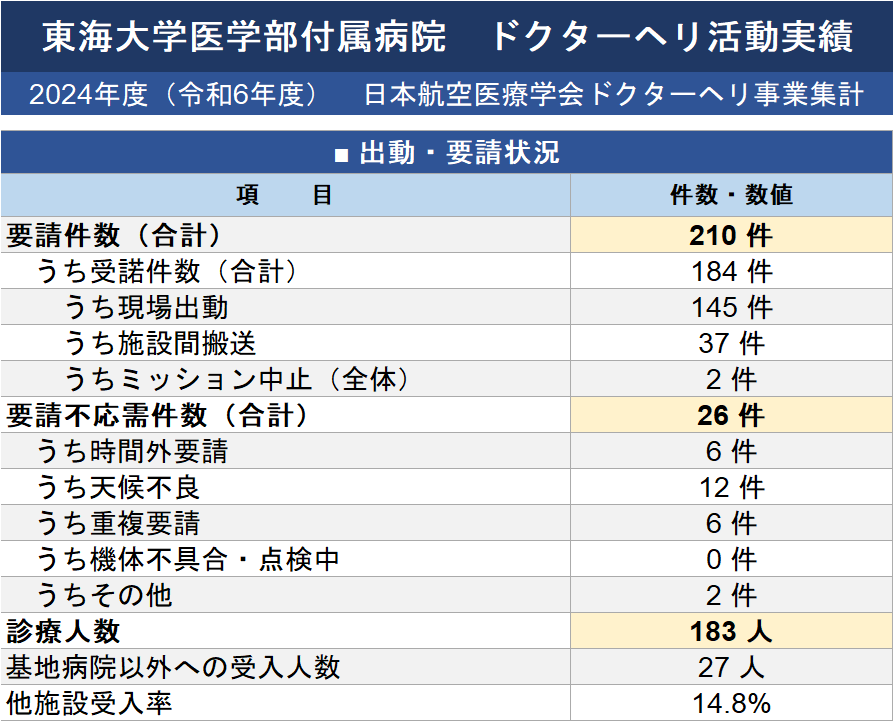
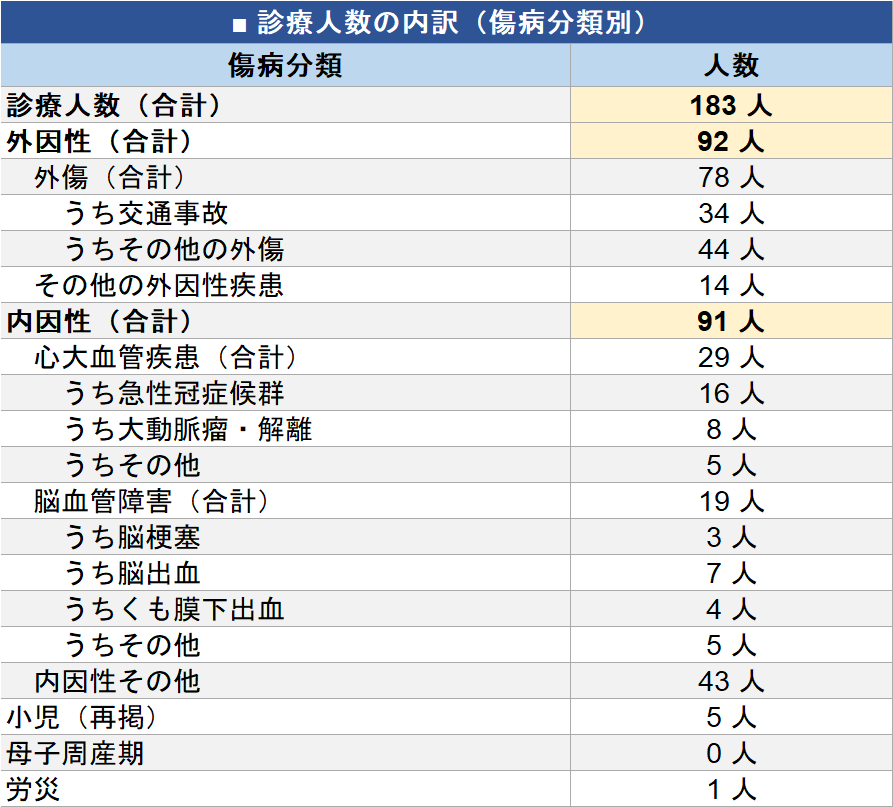
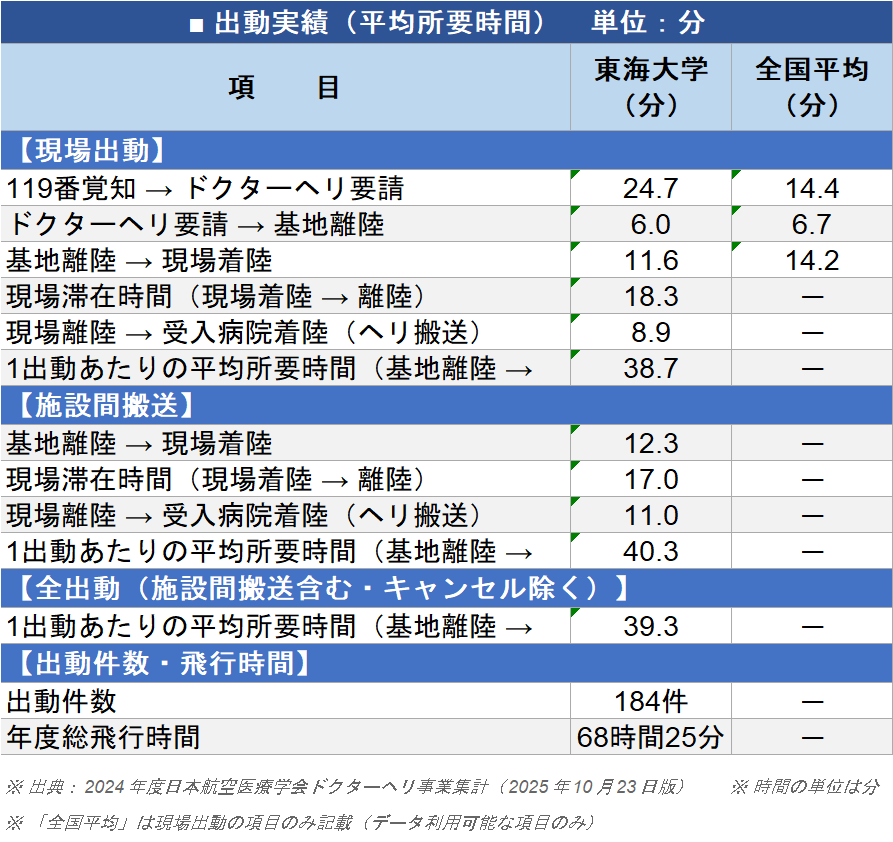
2) Number of patients transported by helicopter by disease (FY2025)


3) Emergency Medical Center Facilities

○1st floor

* Emergency treatment room, emergency examination booths (6 booths), emergency operating room, staff station, family waiting room, doctor waiting room, ambulance staff waiting room
*CT, MRI, angiography room, plain X-ray room

○2nd floor

*19 beds in the E-ICU (emergency intensive Intensive Care Unit)
*3 burn center beds
*E-HCU (Emergency Care Unit) 36 beds

Doctor List

Center: +81463 (93) 1121 (Main)

Professor Seiji Morita (Chief) and Vice President

Specialization

Critical Care Department

Specialist

Certified Instructor and Specialist in Emergency Medicine (Japanese Society for Emergency Medicine) / Specialist in Trauma Surgery (Japanese Association for Trauma Surgery) / Specialist in Burn Injuries (Japanese Society for Burn Injuries) / Certified Surgeon (Japanese Surgical Society) / Certified Vascular Interventional Radiologist (Tokai ER) / Registered DMAT Team Leader

Specialized Areas

Severe trauma, severe burns, environmental injuries, IVR, PCPS

Professor Asuka Tsuchiya, Director of Emergency Medical Center and Head of the Department

Specialization

Critical Care Department

Specialist

Certified Instructor and Specialist in Emergency Medicine (Japanese Society for Emergency Medicine) / Specialist in Trauma Surgery (Japanese Association for Trauma Surgery) / Specialist in Surgery (Japanese Surgical Society) / Specialist in Intensive Care Medicine (Japanese Society of Intensive Care Medicine) / Specialist in Interventional Radiology (Japanese Society of Interventional Radiology) / Certified Instructor (Japanese Society for Aviation Medicine) / Certified Specialist (Japanese Society for Clinical Epidemiology) / Specialist in Social Medicine (Japanese Association of Medical Specialists) / Certified Physician (Japanese Primary Care Association) / Registered Chief DMAT Member

Specialized Areas

Severe trauma, doctor helicopter

Professor Mari Amino

Specialization

Critical Care Department, Cardiology

Specialist

Certified Physician of the Japanese Society of Internal Medicine / Specialist of the Japanese Circulation Society / Specialist of the Japanese Society of Arrhythmia and Electrocardiology / Specialist of the Japanese Society of Anti-Aging Medicine / Certified Physician of the Japanese Society for Health Checkups and Preventive Medicine / Certified Health and Sports Physician of the Japan Medical Association / Certified Industrial Physician of the Japan Medical Association

Specialized Areas

Sports cardiology, preventive medicine, arrhythmia

Associate Professor Kazuo Umezawa

Specialization

Critical Care Department, infectious diseases

Specialist

Certified Emergency Physician (Japanese Society for Emergency Medicine), Infection Control Doctor, Registered DMAT Leader

Specialized Areas

Severe trauma, severe burns, intensive care, sepsis

Associate Professor Takeshi Saito

Specialization

Critical Care Department

Specialist

legal addiction

Specialized Areas

Acute poisoning, legal poisoning, drug toxicology analysis

Lecturer: Rie Yamamoto

Specialization

Critical Care Department

Specialist

Certified Instructor and Specialist in Emergency Medicine (Japanese Society for Emergency Medicine) / Specialist in Hyperbaric and Diving Medicine (Japanese Society for Hyperbaric and Diving Medicine) / Clinical Toxicologist (Japanese Society of Toxicology) / Registered Chief DMAT Member

Specialized Areas

Acute poisoning, emergency medical system

Hiromichi Aoki, Lecturer, Deputy Director of Emergency Medical Center

Specialization

Critical Care Department

Specialist

Certified Emergency Medicine Specialist (Japanese Society for Emergency Medicine) / Certified Surgeon (Japanese Surgical Society) / Certified Trauma Surgeon (Japanese Association for Trauma Surgery) / Certified Burn Injury Specialist (Japanese Society for Burn Injuries) / Registered DMAT Leader / Certified Vascular Interventional Radiologist (Tokai ER)

Specialized Areas

Severe trauma, Gastroenterological Surgery disease, intensive care

Lecturer: Naoya Miura

Specialization

Critical Care Department

Specialist

Certified Instructor and Specialist in Emergency Medicine (Japanese Society for Emergency Medicine) / Specialist in Intensive Care Medicine (Japanese Society of Intensive Care Medicine) / Member of Japan DMAT (Disaster Medical Assistance Team)

Specialized Areas

intensive care

Lecturer Nobuo Watanabe

Specialization

Critical Care Department

Specialized Areas

basic research

Instructor: Tomoya Nishino

Specialization

Critical Care Department

Specialist

Certified Instructor and Specialist in Emergency Medicine (Japanese Society for Emergency Medicine) / Specialist in Intensive Care Medicine (Japanese Society of Intensive Care Medicine) / Specialist in Hyperbaric and Diving Medicine (Japanese Society of Hyperbaric and Diving Medicine) / Certified Instructor in Aviation Medicine (Japanese Society for Aviation Medicine) / Kanagawa DMAT Member

Specialized Areas

Emergency, initial trauma treatment, cardiopulmonary resuscitation

Assistant Professor Uehata Atsushi

Specialization

Critical Care Department

Specialist

Certified Emergency Physician (Japanese Society for Emergency Medicine) / Certified Surgical Physician (Japanese Surgical Society) / Certified Abdominal Emergency Physician (Japanese Society for Abdominal Emergency Medicine) / Certified ACS Surgeon (Japanese Society for Advanced Surgery and Critical Care Medicine) / Member of the Japanese DMAT Team

Specialized Areas

Severe trauma, intensive care, initial emergency treatment

Naoki Sakota, Assistant Professor

Specialization

Critical Care Department

Specialist

Certified Emergency Physician (Japanese Society for Emergency Medicine) / Certified Surgical Specialist (Japanese Surgical Society) / Certified Abdominal Emergency Physician (Japanese Society for Abdominal Emergency Medicine) / Member of Japan DMAT (Disaster Medical Assistance Team)

Specialized Areas

Severe trauma, intensive care, initial emergency treatment

Assistant Professor Michihiro Takeda

Specialization

Critical Care Department

Specialist

Board Certified Emergency Physician (Japanese Society for Emergency Medicine) / Board Certified Surgical Physician (Japanese Surgical Society) / Kanagawa DMAT Member

Specialized Areas

Severe trauma, intensive care, initial emergency treatment

Assistant Professor Mayo Okawa

Specialization

Critical Care Department

Specialist

Japanese Society for Emergency Medicine Certified Emergency Physician / Kanagawa DMAT Member

Specialized Areas

Intensive care, emergency first care

Assistant Professor Kiyohiko Adachi

Specialization

Critical Care Department

Specialist

Japan Surgical Society Specialist

Specialized Areas

Intensive care, emergency first care

Kazuko Hotta, Assistant Professor

Specialization

Neurosurgery, Intensive Care, and Critical Care Department

Specialist

Specialist and Instructor, Japan Neurosurgery Society / Specialist, Instructor, and Councilor, Japanese Society for Neurotrauma / Certified Neurosurgery Society / Certified Spine and Spinal Cord Surgeon and Specialist, Japanese Society for Spinal Surgery / Specialist and Instructor, Japanese Stroke Society / Specialist and Instructor, Japanese Dementia Society / Specialist and Instructor, Japanese Headache Society / Intensive Care Specialist, Japanese Society of Intensive Care Medicine / Specialist and Councilor, Japanese Association for Trauma Surgery / Certified Clinical Physician, Japanese Society of Rehabilitation Medicine / Clinical Neuropsychologist / Occupational Physician, Japan Society for Occupational Health / Certified Occupational Physician, Japan Medical Association / Certified Sports Doctor, Japan Sports Association (Member of the Medical Science Committee, Kanagawa Football Association) / Disaster Medical Coordinator, Japanese Society for Disaster Medicine

Specialized Areas

Neurosurgery procedures and management, intensive care and emergency medicine.

Seiji Nakahara, Clinical Assistant, Surgical Board Certified Double Board Program

Naoki Himizu, Clinical Assistant, Internal Medicine Specialist, Double Board Program

Yukie Yoshizawa, Clinical Assistant

Koko Suzuki, Clinical Assistant

Meguru Akiha, Clinical Assistant, plastic surgery Surgeon, Double Board Program

Miri Irie, Clinical Assistant

Ryo Iino, Clinical Assistant, currently on secondment from Yamanashi University Hospital.

Ibuki Nakamura, Clinical Assistant, currently on secondment from Fujisawa Municipal Hospital.