
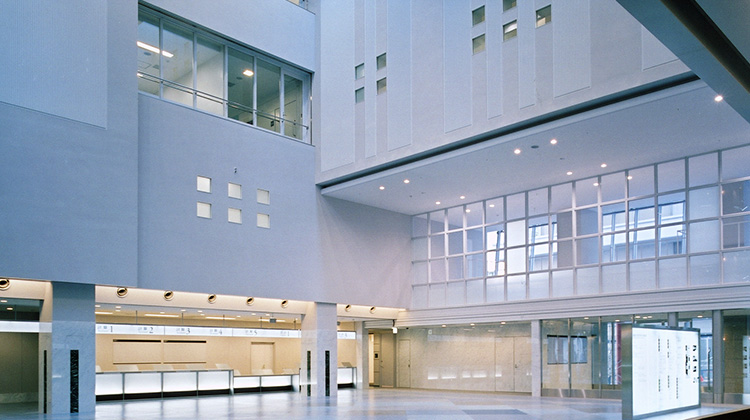
Tokai University Hospital

Font size
ENGLISH JAPANESE
ENGLISH
JAPANESE
For visitors
For medical professionals
Hospital Information
Clinical department/department
Recruitment Information

phone

Web
reservation

Clinical department/department

Hematology-oncology

Treatment details

The Department of Hematology-oncology mainly treats hematologic neoplastic diseases and intractable blood diseases.

Hematologic oncology refers to so-called "blood cancers" such as leukemia, malignant lymphoma, and multiple myeloma, while intractable hematologic diseases refer to diseases requiring highly specialized treatment, such as aplastic anemia, idiopathic thrombocytopenic purpura, and hemophilia, which are designated as nationally designated diseases. The number of hematologists nationwide, including pediatric hematologists, is small, at approximately 2,700, and hospitals with full-time hematology specialists are also limited. Therefore, our Hematology-oncology 's medical service area is exceptionally wide, extending from central Kanagawa Prefecture and the Shonan district to eastern Shizuoka, among university hospitals in the Tokyo metropolitan area. We provide comprehensive services, from diagnosis to treatment, including hematopoietic stem cell transplantation, for patients with hematologic disorders in the region. Diagnosis and treatment of hematologic disorders require the support of multidisciplinary experts, including pathology, clinical laboratories, Division of Nursing, Division of Pharmacy, and clinical trial and transplant coordinators. One of our department's strengths, compared to other university hospitals, is the extensive staffing in each department.

Our greatest goal in Hematology-oncology is to provide high-quality medical care to local residents through the teamwork we have built up over many years.

Main target diseases

Hematologic neoplastic diseases

  • Acute myeloid leukemia

  • acute lymphoblastic leukemia

  • Chronic myeloid leukemia

  • chronic lymphocytic leukemia

  • Adult T-cell leukemia/lymphoma

  • Myelodysplastic syndromes

  • Malignant lymphoma (Hodgkin's lymphoma, non-Hodgkin's lymphoma)

  • Multiple myeloma

Other blood disorders

  • aplastic anemia

  • Paroxysmal nocturnal hemoglobinuria

  • hemolytic anemia

  • Megaloblastic anemia

  • polycythemia vera

  • Essential thrombocythemia

  • Idiopathic thrombocytopenic purpura

  • Thrombotic thrombocytopenic purpura

  • Hemophilia, etc.

Main medical achievements

acute leukemia

In recent years, advances in transplant medicine have made it possible for relatively elderly patients (around 70 years old) to receive this therapy. Additionally, several molecularly targeted drugs for acute leukemia have now emerged (BCL2 inhibitors, FLT3 inhibitors, dual antibodies, antibody-drug conjugates, etc.), and they are being used in relapsed and refractory cases, to prevent relapse after transplantation, and for elderly patients who previously had few treatment options. Our department also actively uses these drugs in an effort to improve overall treatment outcomes for acute leukemia.

Malignant lymphoma

We are a member of the Lymphoma Group of the Japan Clinical Oncology Group (JCOG), a research group led by the Ministry of Health, Labor, and Welfare. The incidence of malignant lymphoma has been increasing in recent years, with over 180 new cases diagnosed at our hospital alone last year. As a general rule, initial treatment is based on internationally supported "standard treatments," such as R-CHOP therapy and Pola+CHP therapy for non-Hodgkin's lymphoma, and A+AVD therapy for Hodgkin's lymphoma. If we determine that clinical trial participation would be beneficial to the patient based on factors such as histological type and progression, we may recommend that the patient participate in the trial. In particular, in recent years, promising new drugs have emerged for T-cell lymphoma, which previously had limited treatment options, and our department is also participating in clinical trials.

Multiple myeloma

The number of patients is increasing in recent years, reflecting the aging society. The prevalence in Japan is estimated at 2-3 cases per 100,000 people, and our hospital sees approximately 30 new patients annually. Treatment is based on the International Myeloma Working Group's diagnostic criteria, and is selected based on current evidence, taking into account age, general condition, disease stage, and chromosomal abnormalities. For patients who meet transplant criteria at the time of initial diagnosis, we actively perform autologous peripheral blood stem cell transplantation. In recent years, daratumumab has become available as an initial treatment in addition to bortezomib and lenalidomide, and treatment outcomes have improved thanks to treatment strategies aimed at achieving deep responses. Even for patients who have relapsed, we are treating them while maintaining their quality of life (QOL) through a combination of carfilzomib, ixazomib, pomalidomide, and elotuzumab. Furthermore, starting in 2023, we will be the only facility in Kanagawa to offer Abekuma CAR-T therapy. In addition, clinical trials of new drugs and chimeric antigen receptor gene-modified T cell (CAR-T) therapy are underway, and our department is participating in several of these trials.

About hematopoietic stem cell transplantation

When it is thought that a cure with standard drug therapy is difficult, hematopoietic stem cell transplantation may be indicated. Transplant cells are selected from among bone marrow/peripheral blood stem cells from a related donor with a matching histocompatibility test (HLA), bone marrow/peripheral blood stem cells from an HLA-matched bone marrow bank donor, or umbilical cord blood from an umbilical cord blood bank. Depending on the disease and the patient's age, a mini-transplant with reduced pre-transplant treatment may be selected.

Our department has an extensive track record of transplants, performing approximately 60 transplants annually, including approximately 50 allogeneic hematopoietic stem cell transplants and 10 autologous peripheral blood stem cell transplants. In recent years, the proportion of umbilical cord blood transplants has increased significantly. Treatment outcomes vary significantly depending on the patient's condition at the time of transplant (whether in remission or not, age, presence of complications, etc.) and the disease, making it difficult to uniformly evaluate outcomes. However, for diseases with poor prognoses, this is the only treatment aimed at achieving a cure, so we actively select the optimal time to perform it. Since 2006, the survival rate for allogeneic transplants has been approximately 50%, and many patients have successfully returned to society. Since 2015, we have been designated a regional core hospital for promoting hematopoietic stem cell transplantation, and since April 2020, we have been operating as a core transplant facility in the region.

Clinical trials

When new treatment methods or drugs are developed that are expected to surpass conventional standard treatments, their safety and efficacy must be verified domestically, even if they have proven efficacy overseas. Clinical trials are conducted for this purpose, and they are essential for new drugs to be approved in Japan and become available to patients. Hematology-oncology and Oncology plays a central role in these efforts, conducting numerous clinical trials for leukemia, malignant lymphoma, multiple myeloma, gastric myelodysplastic syndrome, and other conditions, contributing to the approval of new drugs. We also actively participate in nationwide multi-institutional collaborative research projects such as the JCOG and JALSG, and our goal is to contribute to improving the treatment outcomes of hematological disorders in Japan through clinical research. All clinical trials are approved and conducted after rigorous review by the institutional review boards (IRBs) of the university and its affiliated hospitals.
The registration and implementation status of clinical trials is fluid. If you have any questions, please contact us individually.

Greetings

Doctor List

Department Chief: Yoshiaki Ogawa
Outpatient Chemotherapy Unit Director: Ken Omachi
Blood Bank Director: Seiko Toyoda
Chief of Ward 12B (sterile): Onizuka Masahito
Deputy Chief Physician of Ward 12B: Shinichiro Machida

Outpatient: 0463 (93) 1121 extension 6680

Professor Hiroshi Kawada

Specialization

hematology
Clinical Oncology

Specialist

Specialist and instructor of the Japanese Society of Internal Medicine, Specialist and instructor of the Japanese Society of Hematology, Specialist of the Japanese Society of Anti-Aging Medicine

Specialized Areas

Molecular targeted therapy for hematologic tumors, drug therapy for hematopoietic diseases

Outpatient medical day

Wednesday and Friday

Professor Yoshiaki Ogawa

Specialization

hematology

Specialist

Specialist and instructor of the Japanese Society of Internal Medicine / Specialist and instructor of the Japanese Society of Hematology

Specialized Areas

Drug therapy for hematopoietic diseases

Outpatient medical day

Monday, Thursday, Saturday

Professor Makoto Onizuka

Specialization

hematology

Specialist

Specialist and instructor of the Japanese Society of Internal Medicine, specialist and instructor of the Japanese Society of Hematology, and certified doctor of the Japanese Society of Hematopoiesis and Immune Cell Therapy

Specialized Areas

Drug therapy for hematopoietic diseases, hematopoietic stem cell transplantation

Outpatient medical day

Wednesday and Friday

Associate Professor Rikio Suzuki

Specialization

hematology

Specialist

Specialist and instructor of the Japanese Society of Internal Medicine, specialist and instructor of the Japanese Society of Hematology, and certified by the Japan Board of Certified Oncologists

Specialized Areas

Drug therapy for hematopoietic diseases, especially multiple myeloma

Outpatient medical day

Tuesday, Thursday, Friday

Lecturer Ken Omachi

Specialization

hematology

Specialist

Specialist and instructor of the Japanese Society of Internal Medicine / Specialist and instructor of the Japanese Society of Hematology

Specialized Areas

Drug therapy for hematopoietic diseases

Outpatient medical day

Monday, Tuesday, Wednesday, Friday

Lecturer: Shinichiro Machida

Specialization

hematology

Specialist

Specialist and instructor of the Japanese Society of Internal Medicine / Specialist and instructor of the Japanese Society of Hematology / Certified oncologist by the Japan Cancer Therapy Board / Certified doctor and council member of the Japanese Society of Hematopoietic and Immune Cell Therapy / Industrial physician diploma

Specialized Areas

Drug therapy for hematopoietic diseases, hematopoietic stem cell transplantation

Outpatient medical day

Monday, Thursday, Friday

Lecturer: Masako Toyosaki

Specialization

hematology

Specialist

Specialist and instructor of the Japanese Society of Internal Medicine / Specialist and instructor of the Japanese Society of Hematology / Certified doctor and council member of the Japanese Society of Hematopoiesis and Immune Cell Therapy / Certified doctor and council member of the Japanese Society of Transfusion Medicine and Cellular Therapy / Certified doctor and council member of the Japanese Society of Autologous Blood Transfusion

Specialized Areas

Drug therapy for hematopoietic diseases, hematopoietic stem cell transplantation, transfusion medicine

Outpatient medical day

Tuesday and Wednesday

Instructor: Daisuke Ogiya

Specialization

hematology
Clinical Oncology

Specialist

Specialist and instructor of the Japanese Society of Internal Medicine / Specialist, instructor and council member of the Japanese Society of Hematology / Specialist and instructor of the Japanese Society of Clinical Oncology / Certified cancer treatment physician by the Japan Board of Certified Oncologists / Certified physician of the Japanese Society of Hematopoietic and Immune Cell Therapy

Specialized Areas

Drug therapy for hematopoietic diseases, immunotherapy for solid cancers, hematopoietic stem cell transplantation

Outpatient medical day

Mondays and Thursdays

Lecturer: Hidetsugu Kawai

Specialization

hematology

Specialist

Specialist and instructor of the Japanese Society of Internal Medicine, Japanese Society of Hematology, and Japanese Society of Clinical Oncology

Specialized Areas

Drug therapy for hematopoietic diseases

Outpatient medical day

Monday and Friday

Assistant Professor Ryujiro Hara

Specialization

hematology

Specialist

Specialist and instructor of the Japanese Society of Internal Medicine, specialist and instructor of the Japanese Society of Hematology, and certified doctor of the Japanese Society of Hematopoiesis and Immune Cell Therapy

Specialized Areas

Drug therapy for hematopoietic diseases

Assistant Professor Sawako Shiraiwa

Specialization

hematology

Specialist

Certified physician of the Japanese Society of Internal Medicine, specialist of the Japanese Society of Hematology, and certified physician of the Japanese Society of Hematopoietic and Immune Cell Therapy

Specialized Areas

Drug therapy for hematopoietic diseases

Miina Nasukawa, Clinical Assistant

Specialization

hematology

Specialized Areas

Drug therapy for hematopoietic diseases

Shinichi Tsunoda, Clinical Assistant

Specialization

hematology

Specialist

Specialist of the Japanese Society of Internal Medicine

Specialized Areas

Drug therapy for hematopoietic diseases

Shunsuke Tomita, Clinical Assistant

Specialization

hematology

Specialized Areas

Drug therapy for hematopoietic diseases